Credit Score Improvement Strategies: Simple and Effective Tips for Success
Improving your credit score can feel like a daunting task, but with the right credit score improvement strategies, it’s entirely achievable. A good credit score opens doors to better interest rates, higher credit limits, and improved financial opportunities overall. Whether you’re starting from scratch or trying to repair a less-than-perfect score, understanding and applying simple credit score improvement techniques can lead you to long-term success.
In this article, we’ll explore some practical and easy-to-implement credit score improvement strategies that anyone can use to boost their financial health.
Understanding the Basics of Credit Scores
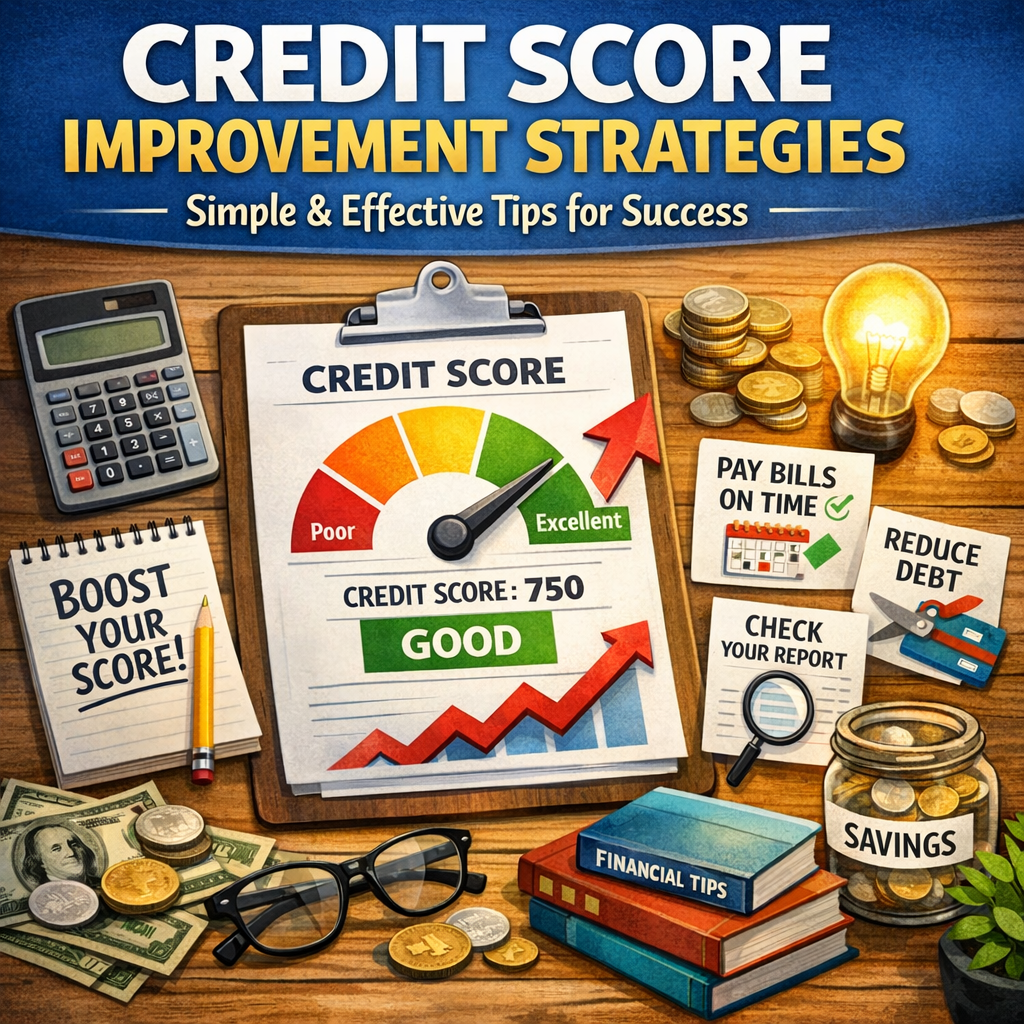
Before diving into specific credit score improvement strategies, it’s important to understand what a credit score actually is. A credit score is a numerical representation of your creditworthiness, typically ranging from 300 to 850. This score is calculated based on factors such as payment history, credit utilization, length of credit history, types of credit accounts, and recent credit inquiries.
Lenders use this score to evaluate the risk of lending you money. The higher your score, the more credit-worthy you appear, which can lead to better loan terms and savings on interest rates.
Simple Credit Score Improvement Starts with Timely Payments
One of the most effective credit score improvement strategies is ensuring you make all your payments on time. Your payment history accounts for approximately 35% of your credit score calculation, making it the single most influential factor.
To adopt this strategy successfully:
– Set up automatic payments or reminders so you never miss a due date.
– Prioritize paying bills for credit cards, loans, and utilities promptly.
– If you’ve missed payments, get current as soon as possible and maintain consistent payment patterns to rebuild trust with lenders.
Keep Your Credit Utilization Low
Credit utilization, the ratio of your credit card balances to your credit limits, is the second most influential factor in your credit score. Experts recommend using less than 30% of your available credit to appear responsible with borrowing.
Simple credit score improvement tips related to utilization include:
– Paying off balances in full each month if possible.
– Spreading out purchases across multiple cards to reduce utilization on any single card.
– Requesting a credit limit increase to lower your utilization ratio, but avoid increasing spending.
Dispute Errors on Your Credit Report
Errors on your credit report can unfairly harm your credit score. A key credit score improvement strategy is regularly reviewing your credit report for inaccuracies and disputing any errors with the credit bureaus.
To do this:
– Obtain a free copy of your credit report from each of the three major credit bureaus annually through AnnualCreditReport.com.
– Examine each report carefully for incorrect accounts, duplicate charges, or wrongly reported late payments.
– File disputes online or via mail, and follow up until corrections are made.
By actively monitoring and correcting your credit report, you can ensure your score reflects your true credit behavior.
Avoid Opening Too Many New Accounts
While it might be tempting to open new credit cards to increase overall limits, applying for multiple new accounts in a short period can negatively impact your score. Each hard inquiry from a lender can lower your score slightly, and opening several accounts quickly suggests higher risk.
Adopt a patient and strategic approach:
– Only apply for credit when necessary.
– Space out credit applications over time.
– Focus on managing existing accounts responsibly first.
Maintain a Mix of Credit Types
Having a variety of credit types—such as credit cards, auto loans, mortgage loans, and personal loans—can be beneficial to your credit score. It shows lenders you can handle different types of credit responsibly.
While it’s not advisable to take out a loan solely to improve credit mix, consider this a longer-term strategy:
– Keep accounts open longer.
– Avoid closing old credit card accounts if they have no annual fees, as longer credit history usually boosts scores.
Practice Patience and Consistency
Credit score improvement strategies often require time to take effect. There is no instant fix, but consistent positive credit behavior will gradually elevate your score. Keep track of your progress monthly and celebrate milestones along the way.
Conclusion
Implementing simple credit score improvement strategies can make a significant difference in your financial life. By focusing on timely payments, controlling credit utilization, disputing errors, and managing your credit accounts wisely, you set yourself up for success. Remember, improving your credit score is a marathon, not a sprint. With persistence and smart habits, you’ll see your score climb and open the door to better financial opportunities.