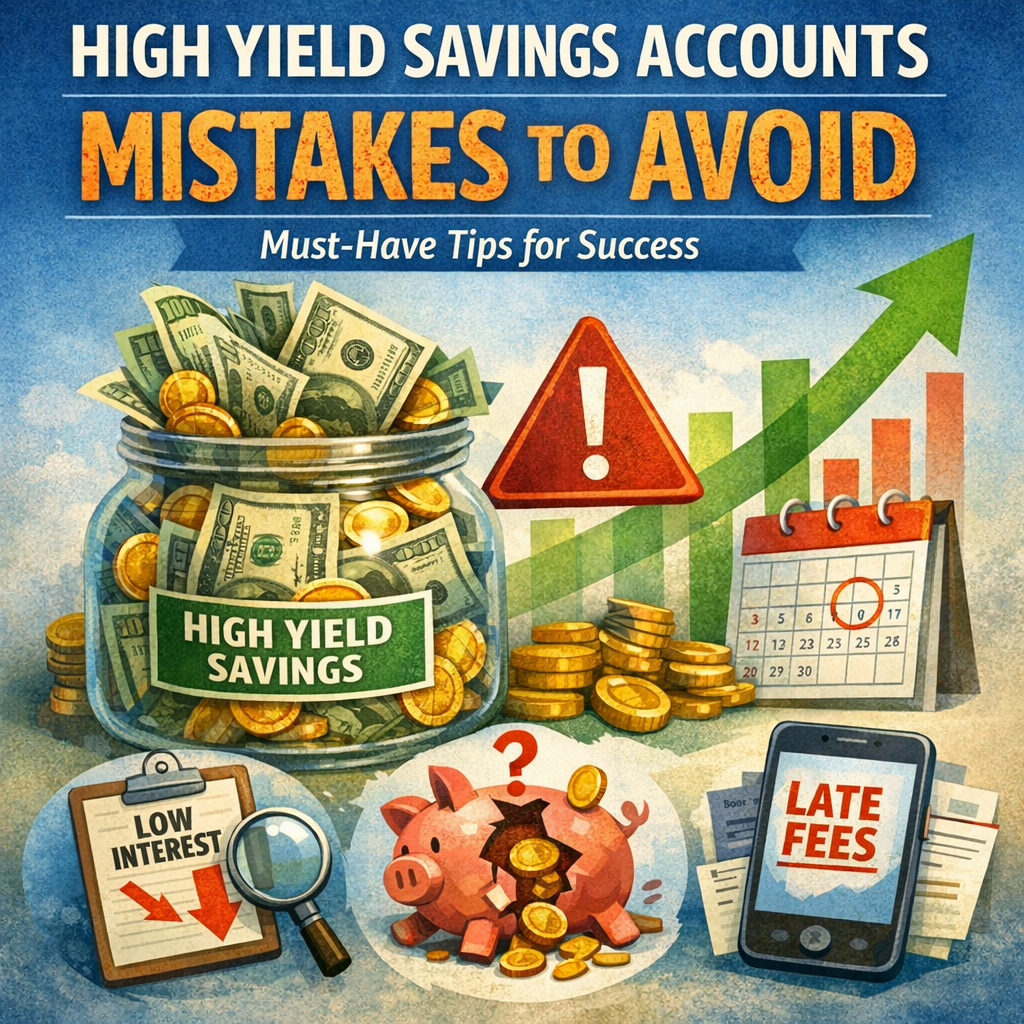
High Yield Savings Accounts Mistakes to Avoid: Must-Have Tips for Success
High yield savings accounts offer an excellent opportunity to grow your savings faster than traditional savings accounts. With higher interest rates, they allow your money to work harder for you, providing a safe, accessible way to build your financial cushion. However, many savers unknowingly make costly errors that diminish the benefits of these accounts. Understanding common high yield savings accounts mistakes and implementing effective high yield savings accounts tips can significantly improve your success and maximize your earnings.
Common High Yield Savings Accounts Mistakes to Avoid
Before you open or deposit more funds into a high yield savings account, it’s important to recognize some of the common pitfalls that can negatively impact your returns.
1. Ignoring Fees and Minimum Balance Requirements
Some high yield savings accounts come with hidden fees or strict minimum balance requirements. High fees can eat into your interest earnings, making what seems like a lucrative account less profitable over time. Similarly, not maintaining the required minimum balance can lead to penalty fees or a downgrade to a lower interest rate.
Tip: Always review the fee structure and minimum balance rules carefully. Opt for accounts with no monthly fees and reasonable minimum balances to avoid unnecessary costs.
2. Overlooking Interest Rate Changes
High yield savings accounts typically offer variable interest rates that can fluctuate based on market conditions. Many savers make the mistake of not monitoring these changes regularly, which can cause them to settle for suboptimal rates when better options become available.
Tip: Keep an eye on your account’s interest rate and compare it periodically with other institutions. If the rate drops significantly, consider transferring your funds to a competitor offering a higher yield.
3. Failing to Use the Account Exclusively for Savings
While high yield savings accounts are designed for saving, some people use them as everyday transaction accounts. Regular withdrawals or transfers can result in reduced interest or even fees, especially if the account limits certain types of transactions.
Tip: Treat your high yield savings account purely as a savings vehicle. Use a separate checking account for daily expenses and big purchases to avoid unnecessary penalties.
4. Neglecting to Understand Withdrawal Limits
Federal regulations, specifically Regulation D, traditionally limited the number of certain withdrawals and transfers from savings accounts to six per month. Some institutions still enforce these limits or impose fees if you exceed them. Exceeding these limits can temporarily convert your account into a checking account with a lower interest rate or cause the bank to close it.
Tip: Familiarize yourself with your bank’s withdrawal policies and avoid making excessive transactions. Automate transfers less frequently if possible.
5. Not Taking Advantage of Signup Bonuses or Account Promotions
Many online banks offer attractive signup bonuses or promotional interest rates for new high yield savings account holders. Ignoring these offers can mean missing out on extra earnings.
Tip: When opening a new account, look for promotions that can boost your initial deposit or enhance your interest rate for a limited time. Just be sure to read the fine print regarding qualification requirements and withdrawal restrictions.
—
High Yield Savings Accounts Tips for Maximizing Your Returns
Now that you are aware of what not to do, here are some must-have tips to help you make the most of your high yield savings account.
1. Shop Around for the Best Rates
The financial landscape is competitive, with new banks and credit unions frequently offering higher interest rates to attract customers. Don’t settle for the first account you find.
Tip: Use comparison websites and financial tools to find the current best high yield savings rates. Consider online banks, credit unions, and fintech companies that often provide superior rates compared to traditional brick-and-mortar banks.
2. Automate Your Savings
Consistency is key when growing your savings. Setting up automatic transfers from your checking account to your high yield savings account ensures steady growth without requiring you to remember to make deposits.
Tip: Even small, regular contributions can significantly increase your balance over time thanks to compound interest.
3. Use the Account for Emergency Savings
High yield savings accounts are ideal for emergency funds because they combine liquidity with higher returns than standard accounts, helping you prepare for unexpected expenses without sacrificing growth.
Tip: Aim to save at least three to six months’ worth of living expenses in your high yield savings account.
4. Regularly Review and Rebalance
Over time, your financial needs and market conditions will change. It’s essential to review your savings strategy and rebalance as necessary.
Tip: Periodically assess whether your current high yield savings account still meets your needs or if switching to a new account might offer better terms.
5. Keep an Eye on Inflation
Even at high rates, savings accounts may not always keep pace with inflation. To preserve your purchasing power, you might also consider diversifying your savings into other instruments such as certificates of deposit (CDs) or investment accounts.
Tip: Use your high yield savings account primarily for short-term goals and emergency funds, while exploring other options for long-term growth.
—
Conclusion
Avoiding high yield savings accounts mistakes can significantly enhance your savings growth and financial security. Understanding fees, withdrawal limits, interest rate fluctuations, and the importance of using these accounts solely for saving purposes sets the foundation for success. Coupling this knowledge with smart high yield savings accounts tips like shopping around, automating savings, and regularly reviewing your strategy ensures that your money is working as hard as possible for you. By approaching your high yield savings account thoughtfully and strategically, you can enjoy higher returns and greater peace of mind on your financial journey.