High Yield Savings Accounts Checklist: Your Must-Have Plan for Best Returns
When it comes to growing your money with minimal risk, a high yield savings account is one of the smartest choices you can make. However, simply opening any savings account won’t guarantee the best returns. To maximize your earnings, having a high yield savings accounts checklist is essential. This checklist will guide you through the key factors to consider, helping you craft a solid high yield savings accounts plan that suits your financial goals and ensures you get the most out of your savings.
Why a High Yield Savings Accounts Checklist Matters
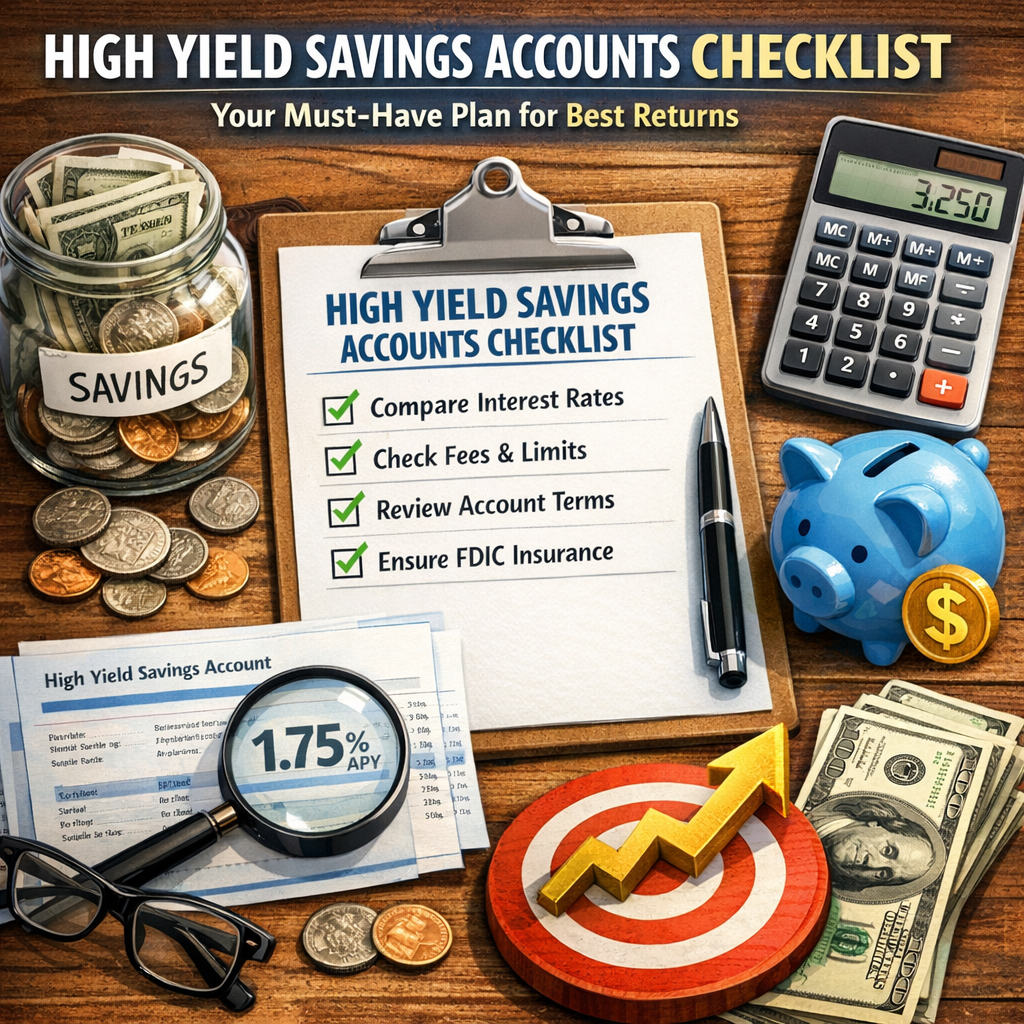
A high yield savings account is designed to offer interest rates significantly higher than traditional savings accounts. While this sounds straightforward, not every high yield savings account is created equal. Variations in fees, minimum balances, compounding methods, withdrawal limits, and accessibility can all impact your net returns.
By using a detailed checklist, you avoid common pitfalls and ensure that the account you choose aligns with your personal savings objectives. Whether you’re saving for an emergency fund, a down payment, or just want to build your nest egg, a structured plan will help you evaluate and compare your options effectively.
Key Elements of a High Yield Savings Accounts Checklist
To develop your high yield savings accounts plan, here are the crucial elements to include in your checklist:
1. Interest Rate and APY
The annual percentage yield (APY) represents the real rate of return earned on your money, accounting for compounding. When reviewing accounts, focus primarily on the APY rather than just the nominal interest rate. Compare the APYs offered by various banks and credit unions to identify which account will grow your money fastest.
2. Compounding Frequency
Interest can be compounded daily, monthly, quarterly, or annually. The more frequently your interest compounds, the faster your savings will grow. Ideally, choose accounts that compound interest daily or monthly to maximize returns.
3. Minimum Balance Requirements
Some high yield accounts require a minimum deposit to open the account or to earn the advertised APY. Make sure you’re comfortable with the minimum balance requirements and understand if falling below that balance will affect your interest or incur fees.
4. Fees and Charges
Avoid accounts that come with monthly maintenance fees, withdrawal fees, or transfer charges, as these can eat into your earnings. Look for fee-free accounts to keep your savings intact.
5. Accessibility and Convenience
Consider how easy it is to deposit and withdraw money. Does the account allow easy transfers to and from your checking account? Is there a mobile app or online banking platform? Convenient access to your funds ensures your savings strategy remains flexible.
6. Withdrawal Limits
Federal regulations (Regulation D) often limit the number of certain types of withdrawals and transfers from savings accounts to six per month. Be sure to understand these restrictions, especially if you expect to access your funds regularly.
7. Security and Insurance
Your peace of mind is invaluable. Confirm that the bank is FDIC insured, or if it’s a credit union, that it is NCUA insured. This insurance protects your funds up to $250,000 per depositor, per institution.
8. Customer Service Quality
Effective and accessible customer support can make managing your savings much easier. Test the provider’s customer service responsiveness and support options before committing.
Building Your High Yield Savings Accounts Plan
After completing your checklist and gathering relevant information, it’s time to organize this data into a coherent high yield savings accounts plan. Here’s how to proceed:
Step 1: Define Your Savings Goal and Timeline
Identify what you are saving for and within what timeframe. This context will help determine how aggressive your savings strategy should be.
Step 2: Narrow Down Your Options
Using your checklist, eliminate accounts that don’t meet your minimum standards. Focus on those offering the best combination of APY, accessibility, and low fees.
Step 3: Calculate Expected Returns
Use online calculators or spreadsheet tools to estimate how much interest you can earn over your chosen timeframe, factoring in compounding and fees.
Step 4: Factor in Liquidity Needs
Decide how frequently you might need to access your savings and make sure the account accommodates those needs.
Step 5: Regularly Review and Adjust
Savings accounts’ interest rates fluctuate regularly. Set a schedule to review your high yield savings accounts plan at least twice a year so you can move your money if higher rates become available elsewhere.
Final Thoughts
Having a meticulous high yield savings accounts checklist ensures you’re not leaving returns on the table and helps you make informed decisions. By systematically comparing features such as APY, fees, withdrawal limits, and account accessibility, you can create a personalized high yield savings accounts plan that maximizes your earnings while aligning with your financial needs. Remember, small differences in interest rates can add up over time — so invest a little effort upfront to find the best account for your money to truly work for you.