Emergency Funds Checklist: The Must-Have Plan for Financial Security
When it comes to building financial security, having an emergency funds checklist is essential. Life is unpredictable, and unexpected expenses—such as medical bills, car repairs, or sudden job loss—can quickly disrupt your financial stability. Without a well-prepared emergency funds plan, you might find yourself scrambling to cover these costs, potentially falling into debt or financial hardship.
In this article, we’ll walk through everything you need to include in your emergency funds checklist and offer practical advice on how to build and maintain your emergency funds plan. Whether you’re just starting or looking to strengthen your financial safety net, these guidelines will help you secure peace of mind.
Why an Emergency Funds Checklist Is Important
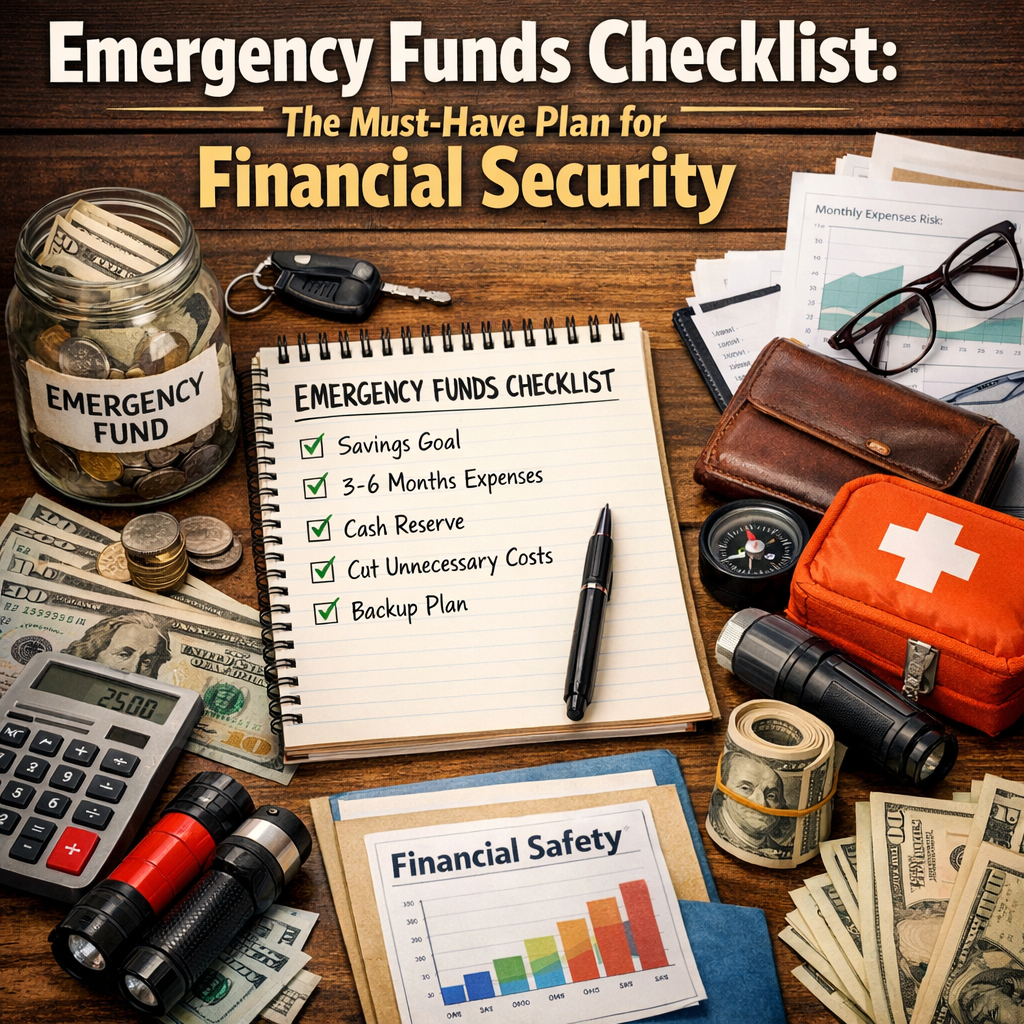
Before diving into the specifics, it’s important to understand why an emergency fund should be a cornerstone of your financial strategy. Emergencies are, by nature, unexpected, and without proper preparation, they can severely derail your financial goals. An emergency funds plan acts like a financial cushion, enabling you to cover unforeseen expenses without compromising essentials like rent, utilities, or groceries.
Having a checklist ensures that your financial safety net is comprehensive, tailored to your unique needs, and ready to support you at any time.
What To Include in Your Emergency Funds Checklist
Creating an efficient emergency funds plan requires careful consideration of your individual circumstances. Here’s a detailed checklist to guide you:
1. Calculate Your Monthly Essential Expenses
Start by listing your essential monthly expenses, including:
– Rent or mortgage payments
– Utilities (electricity, water, internet)
– Groceries and basic household supplies
– Transportation costs (public transit, fuel, car maintenance)
– Insurance premiums (health, auto, home)
– Minimum debt payments
Knowing this amount helps you determine the baseline for your emergency fund.
2. Set Your Emergency Fund Goal
Financial experts generally recommend saving three to six months’ worth of essential expenses. If your income is irregular or your job is particularly volatile, aim for six months or more. For example, if your essential expenses are $2,000 per month, your target fund should be between $6,000 and $12,000.
3. Create a Separate Savings Account
Your emergency fund should be easy to access but separate from your everyday checking account to avoid the temptation to dip into it. Look for a high-yield savings account or money market account that offers liquidity and some degree of interest earnings.
4. Establish a Savings Plan
Map out how much you can realistically save each month toward your emergency fund. Automate transfers to your designated savings account right after payday to build your fund consistently. Even small contributions add up over time.
5. Define What Constitutes an Emergency
Clarifying what qualifies as a true emergency will prevent unnecessary withdrawals. Emergencies typically include:
– Medical emergencies
– Sudden unemployment or loss of income
– Urgent home or car repairs
– Unplanned travel for family emergencies
Avoid using your fund for discretionary expenses or planned purchases.
6. Plan for Inflation and Changing Expenses
Keep in mind that living costs fluctuate. Regularly review and adjust your emergency fund goal to account for inflation and changes in your financial situation, such as new expenses or lifestyle changes.
How to Build and Sustain Your Emergency Funds Plan
Having the checklist is only the first step; building and maintaining your fund requires commitment and smart financial habits.
Start Small and Build Momentum
If your target seems daunting, start with a small goal — maybe $500 or $1,000. This “mini emergency fund” can handle minor unexpected expenses and motivate you to continue saving.
Prioritize Fund Contributions
During periods of financial stability, funnel any extra money like tax returns, bonuses, or side income into your emergency fund. Make this a priority before increasing discretionary spending.
Monitor and Adjust Regularly
Life changes, and so should your emergency funds plan. Review your checklist every six months to ensure it aligns with your current financial needs. Increase your savings rate if your expenses or risk factors rise.
Avoid Borrowing Against Your Fund
Resist the urge to use credit cards or loans before tapping into your emergency fund. Using your savings first prevents accumulating high-interest debt and preserves your financial health.
The Psychological Benefits of an Emergency Funds Checklist
Beyond the financial advantages, having a clear and structured emergency funds checklist provides psychological comfort. Knowing there’s a financial safety net reduces anxiety and stress during challenging times. It empowers you to make better decisions and face uncertainties with confidence.
Final Thoughts: Your Path to Financial Security
Implementing an emergency funds checklist is an indispensable step toward achieving financial security. A carefully planned emergency funds plan not only prepares you for life’s unexpected challenges but also fosters peace of mind. By identifying your essential expenses, setting realistic goals, and maintaining consistent saving habits, you can build a robust safety net that protects you and your family.
Start today by evaluating your finances with the checklist above, and take control of your financial future—one step at a time.