ETF Investing Checklist: Must-Have Tips for the Best ETF Investing Plan
When it comes to building a diversified portfolio, an ETF investing checklist is an essential tool to help investors navigate the vast array of options available. Exchange-Traded Funds (ETFs) have become increasingly popular due to their flexibility, cost-effectiveness, and broad market exposure. However, with thousands of ETFs on the market, creating a sound investment strategy requires careful planning and evaluation. Whether you’re a beginner or an experienced investor, having a well-structured ETF investing plan can significantly improve your chances of meeting your financial goals.
In this article, we’ll outline a comprehensive ETF investing checklist that will help you select the right funds, minimize risks, and optimize returns.
Understand Your Investment Objectives and Risk Tolerance
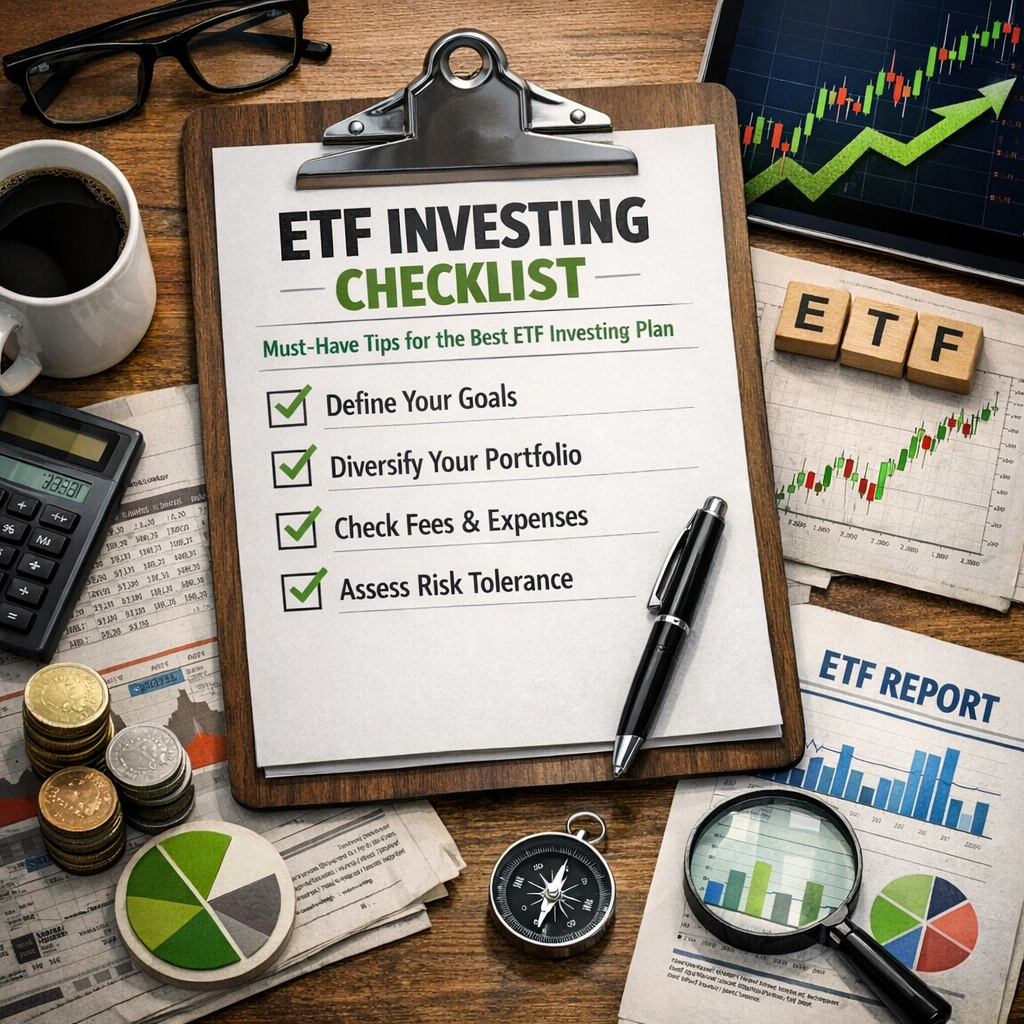
Before diving into any specific ETF, the first step in your ETF investing plan should be a clear understanding of your financial goals and risk tolerance. Ask yourself:
– What is your investment time horizon? Are you investing for short-term gains or long-term wealth accumulation?
– How much risk are you willing to take? Can you tolerate market volatility or do you prefer more stable investments?
– What is your desired rate of return and income needs?
Answering these questions will help you determine the asset classes and sectors that align with your personal profile. For example, a conservative investor might prioritize bond ETFs, while an aggressive investor may lean toward emerging market or sector-specific ETFs.
Research ETF Types and Their Structures
The ETF market is diverse, covering everything from broad market indexes to niche industries and thematic investments. As part of your ETF investing checklist, familiarize yourself with the different types of ETFs:
– Index ETFs: Track major stock or bond indexes like the S&P 500 or the Aggregate Bond Index.
– Sector ETFs: Focus on specific industries such as technology, healthcare, or energy.
– Bond ETFs: Invest in government, corporate, or municipal bonds.
– International and Emerging Market ETFs: Provide exposure to global markets.
– Thematic ETFs: Target specific trends such as clean energy, robotics, or social responsibility.
– Leveraged and Inverse ETFs: Use financial derivatives to amplify gains or bet against the market, typically more suitable for short-term trading.
Understanding these structures will help you pick ETFs that fit your overall investment strategy.
Analyze Expense Ratios and Fees
Fees can significantly impact your investment returns over time. One of the advantages of ETFs is their usually low expense ratios compared to mutual funds. However, costs still vary widely among ETFs.
When creating your ETF investing plan, pay close attention to the following expenses:
– Expense Ratio: The annual fee expressed as a percentage of assets under management.
– Trading Commissions: Some brokers charge commissions for buying and selling ETFs.
– Bid-Ask Spread: The difference between the buying and selling price.
A good rule of thumb is to target ETFs with expense ratios well below 0.50%, especially for passive index funds. Minimizing fees preserves more of your returns and accelerates portfolio growth.
Evaluate Liquidity and Trading Volume
Liquidity is a crucial factor that often goes overlooked. Even if an ETF tracks a desirable index, low liquidity can lead to higher trading costs and difficulty entering or exiting positions.
Your ETF investing checklist should include examining:
– Average Daily Trading Volume: Higher trading volume generally means tighter bid-ask spreads and better pricing.
– Assets Under Management (AUM): Larger funds tend to have better liquidity and are less likely to be closed or merged.
Prioritize ETFs with sufficient liquidity to ensure smooth transactions and avoid unnecessary costs.
Assess the ETF’s Tracking Accuracy
Since many ETFs aim to replicate the performance of an underlying index, it’s important to ensure the fund accurately tracks its benchmark.
Check the fund’s:
– Tracking Error: Measures how closely the ETF’s returns match the benchmark’s returns. Lower tracking error means better replication.
– Replication Method: Some ETFs use full replication (holding all the index components), while others use sampling or derivatives. Full replication usually results in lower tracking error.
By ensuring good tracking accuracy, you can have confidence the ETF will deliver expected market exposure.
Consider Tax Efficiency
Tax implications can impact your after-tax returns significantly. ETFs generally offer tax advantages over mutual funds because of their unique creation and redemption mechanism, which often limits capital gains distributions.
Keep in mind:
– Distribution History: Review past capital gains distributions.
– Fund Structure: U.S.-domiciled ETFs often provide better tax efficiency compared to some international ETFs.
– Your Tax Bracket: Consider how ETF distributions align with your personal tax situation.
Incorporating tax efficiency into your ETF investing plan can enhance your portfolio’s net performance.
Diversify Across Asset Classes and Geographies
A fundamental rule of investing is diversification, which is especially important in your ETF selection. A well-rounded ETF investing plan should spread risk across multiple dimensions:
– Mix equity ETFs (domestic and international) with fixed income ETFs to balance growth and stability.
– Consider exposure to different sectors and market capitalizations (large-cap, mid-cap, small-cap).
– Add alternative asset classes like real estate via REIT ETFs or commodities for further diversification.
Diversification reduces the impact of any one investment performing poorly, contributing to more stable, consistent returns.
Monitor and Rebalance Your Portfolio Regularly
The investment landscape and your financial goals may change over time. Your ETF investing checklist should include a disciplined approach to monitoring and rebalancing your portfolio.
– Regular Reviews: Periodically assess the performance and suitability of your ETFs.
– Rebalancing: Adjust your holdings to maintain your desired asset allocation, especially after significant market fluctuations.
Rebalancing helps lock in gains and manage risks, keeping your investment plan on track.
Conclusion
Creating a successful ETF investing plan requires more than just picking popular funds. A thorough ETF investing checklist that includes defining your objectives, understanding fund types, analyzing costs, evaluating liquidity, tracking accuracy, tax efficiency, diversification, and ongoing management is essential. By following these steps, investors can confidently build portfolios that not only align with their financial goals but also maximize the potential for long-term growth.
Invest wisely, stay informed, and make your ETF investment journey both strategic and rewarding.